I am not interested in tearing down the books that shaped the category. Many of them matter. Some are excellent. Most of them solve one part of the discipline problem. What they do not build is a complete doctrine.
That distinction matters. A motivation book can move you. A memoir can inspire you. A habits book can make you more efficient. A doctrine tells you what governs the whole system.
Advice helps when you are willing. Doctrine holds when you are not.
What the comparison looks like
These are the actual mobile-first comparison visuals now attached to the campaign. The pattern is consistent: useful books solve one layer. Doctrine governs the whole life.

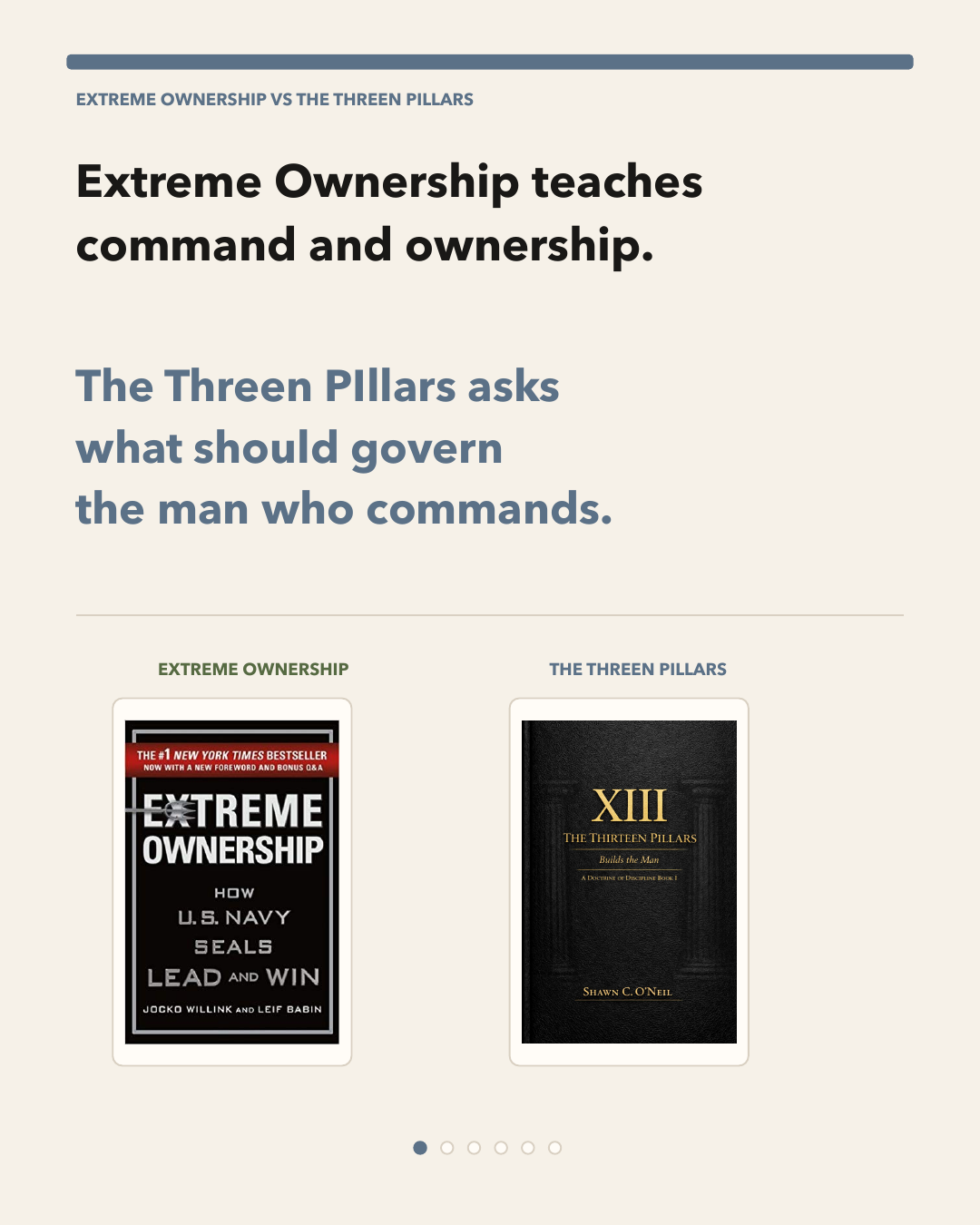
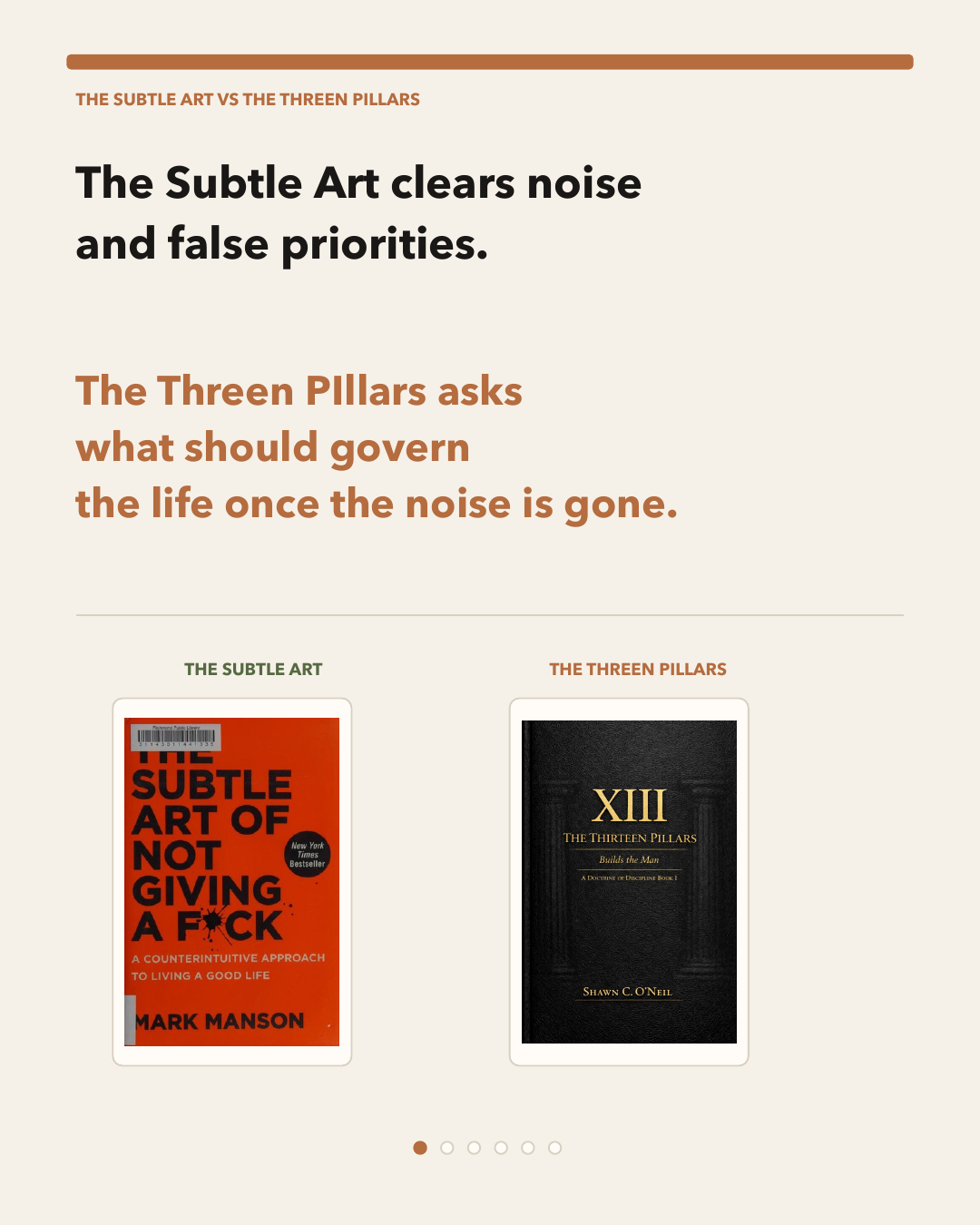
What the market does well
James Clear gave the market a cleaner way to think about habit formation. David Goggins gave people a living demonstration of pain tolerance and refusal. Jocko Willink made discipline legible to a broad audience. Jordan Peterson brought psychological and philosophical weight. Ryan Holiday translated Stoicism for a mass readership.
All of that is useful. None of it is trivial. But those books mainly operate as one of four things: memoir, motivation, philosophy, or tactics.
What they leave open
The unresolved question is bigger: what are the governing laws disciplined people share across centuries, civilizations, professions, and pressure environments?
Not one story. Not one guru. Not one framework built around one personality. The market rarely gives you a system that survives the removal of the author.
Why The XIII Pillars is different
The XIII Pillars was built as doctrine, not motivation. The architecture is different on purpose.
It does not rest on one story or one personality. It uses 39 historical exemplars across 25 centuries to identify 13 governing laws that keep showing up under pressure. The proof is structural. Remove one example and the doctrine still stands.
That is the difference between a persuasive book and a governing book.
The gap in one sentence
The category has books that tell you how to feel better, how to grind harder, or how to build habits. It has very few books that tell you what law should govern the whole life.
Read the doctrine.
Paperback and Kindle are live now. Book One is available on Amazon.